

How To Service A Used Bike At Home
Your bicycle doesn't run on leg ability solitary. It also needs a fiddling lube, a lotta love, and a good heed. Y'all may not know every remedy your cycle needs to live a long life, but you can proceeds plenty wisdom forth the mode to keep information technology in tip-elevation shape and out of the shop with proper bike maintenance.
This collection of mostly timeless advice (until advances in bicycle engineering science make some of it obsolete) will guide you through the office of primary caregiver—so y'all can leave the tough stuff to the professionals.
JOIN BICYCLING At present FOR MORE BIKE REPAIR TIPS!
Good Rules of Pollex
No. one Never loan tools to friends.
No. 2 If it's threaded, grease it.
No. 3 You can't properly adjust a bike that is muddied and not lubricated.
No. iv Perfect the art of irresolute a flat. No excuses.
No. 5 Nylon tire levers are better than metal ones.
No. vi Measure twice, so cut. This especially goes for steerer tubes and integrated seatposts.
No. vii When disassembling something, keep track of the order in which you lot remove parts. Information technology takes the mystery out of putting it back together. (Pro tip: Set up your smartphone to video the disassembly for an easy reference guide.)
No. 8 Check tire force per unit area before every ride, especially if you lot're running tubeless.
No. ix The three near important tools to have on a ride: a multitool with a chain breaker, a pump or CO2, and a patch kit or tube.
No. 10 When tinkering with anything about your cranks, shift into the large band first so yous don't mangle your hand on the chainring teeth.
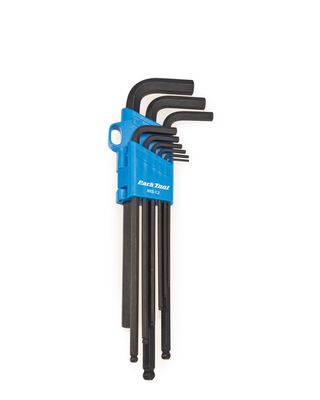
Most Valuable Tool
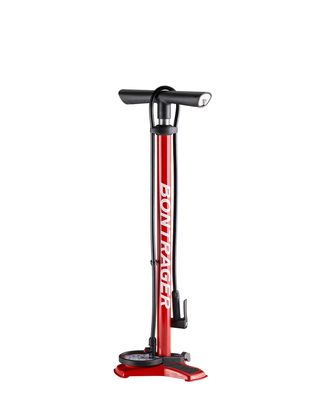
Almost Versatile Pump
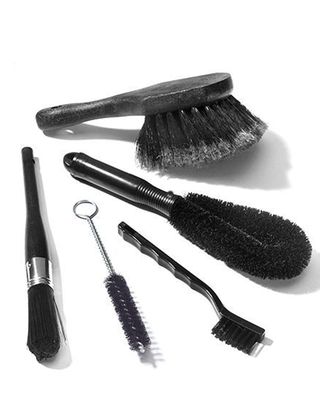
Best Brush Set
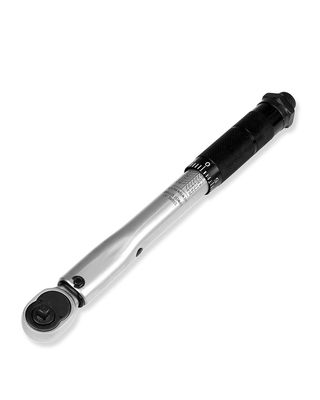
Best Tool For Lite Parts
Best Cleaning Accessory
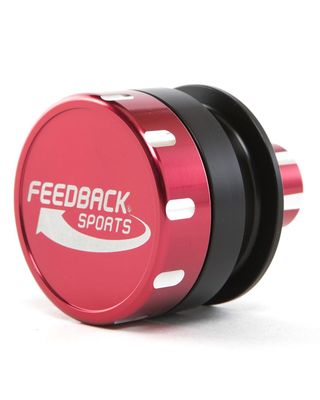
Shakes, Rattles, and Rolls

No. 11 Periodically check for bearing play in your headset, hubs, and cranks. To check your headset, clasp the front brake and rock your bike fore and aft. For bike and creepo bearings, pull the bicycle or crank side to side. If you feel a wiggle, your component needs an adjustment. Don't ignore information technology, or the trouble will get bigger and more expensive.
No. 12 Using a torque wrench (see No. 81), check the tightness of your crank bolts every month. If you simply bought a new bike, check them after every ride for the beginning week.
No. xiii Subsequently you box your cycle for travel but earlier you seal information technology, requite it a side-to-side milk shake to note any loose or rattling parts. And then secure them.
No. xiv Loctite Threadlocker Blue 242 is a must-have accessory for bolts that gather using standard hand tools. It seals threaded fasteners and keeps them from rattling loose due to vibration.
Squeaks, Creaks, and Squeals
No. fifteen If your bike makes a noise, it'due south trying to tell you lot something. Don't ignore it.
No. 16 A creaky creepo is probable loose on the spindle. Remove the crank bolts, lubricate the threads, and reinstall. Tighten everything using a torque wrench.
No. 17 Use a light lubricant to silence squealing rear-derailleur pulley wheels.
No. 18 If your saddle creaks, drip a few drops of oil on the rail where it connects to your saddle and into the clench where it grips the rails. (But earlier you do that, make certain that the area is fully make clean and free of dust and crud—a good cleaning might solve the problem.)
No. nineteen Master the skill of wrapping a handlebar.

No. 20 Create an 'easy accuse' station nigh where you store your bike so yous can easily plug in your cycling figurer, bicycle lights, and even your electronic shifting post-ride, so y'all never lose ability halfway through a century once again.
Respect Your Mechanic
No. 21 Don't be a hero. Whether information technology's due to lack of knowledge or experience, or not having the proper tools for the chore, y'all are non capable of every repair. Sometimes y'all accept to take your problem to a professional.
No. 22 Detect out what your shop mechanic's favorite afternoon munchie is, so bring it along the next fourth dimension you finish in for a repair.
No. 23 Information technology doesn't matter how yous broke it. But don't lie to your bike mechanic.
No. 24 Never roll your bike into the shop and look an on-the-spot repair. You don't know what your mechanic is up against on any given day.
These Are the Brakes
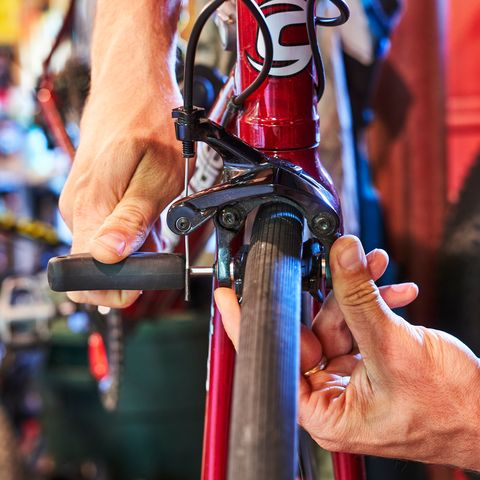
No. 25 3 signs your brake pads are worn: You hear a gritty scraping sound, the grooves in the pad have all but disappeared, or you feel stickiness when you brake.
No. 26 Don't affect disc-restriction pads with your fingers. The oil from your skin tin can decrease their braking ability.
No. 27 Work on i brake at a fourth dimension so y'all ever take an intact restriction to reference.
No. 28 Ever remove disc-brake pads when bleeding your brakes. Utilise a spacer, like Avid's bleed block, to concord the pistons in place.
No. 29 If you've been running bolt-on brake pads and it's time to replace them, at present is the fourth dimension to switch to the cartridge-style type. The next time your pads need replacement, you can simply slip them into the holder, no alignment needed.
No. 30 After removing a disc-brake wheel from the frame or fork, exercise not squeeze the restriction lever. Doing and so can crusade the brake pads to clamp together tightly—and separating them is no like shooting fish in a barrel task.
No. 31 When replacing a brake cable, initially adjust information technology so the pads are fully against the rim, and so squeeze the brake lever every bit hard equally you can a few times to release slack in the cablevision and compress the housing. Echo these steps until you don't feel the cablevision and housing give anymore. Now accommodate your brakes the way yous desire them to experience.
No. 32 Utilize sandpaper to roughen up glazed brake pads.
No. 33 Snug down your brake levers with a safety band when adjusting rim-restriction pads.
Need to Know
No. 34 Practice not use a solvent to lube your chain.
No. 35 If your wheel doesn't sit down directly in your bike after a hub overhaul, brand certain the springs on the quick-release are installed correctly. The tapered end should always face in.
No. 36 Over time, the sealant on your tubeless setup dries out and becomes less effective at preventing leaks. Refresh it every 3 months (or every month if yous accept a mountain bicycle).
No. 37 Lots of experts tell y'all to employ a level on your saddle as a starting signal for comfort. What they might forget to mention: Your bike has to be on a level surface for this to work properly.
No. 38 Forget which kind of valves yous have? Schrader valves are similar to the ones found on your auto; presta valves are thinner, with a modest nut that has to be opened prior to inflation.
No. 39 Places where grit hides: in brake pads, between tubes and tires, in cleats and pedals.
No. 40 If a carbon function moves when it'southward non supposed to, it tin can get scratched or trashed.
No. 41 If you pinch-flat oft, the PSI (air volume) in your tires is most certainly too depression.
No. 42 The difference between an axle and a spindle: An axle remains stationary while something rotates around it (think wheel); a spindle revolves inside a stationary torso (think bottom bracket).
No. 43 Pluck your spokes ofttimes and so you lot get to know what feels and sounds right. When one feels off or its tone is different from the residuum, you lot know you have a loose spoke.
No. 44 Install quick-release skewers so the levers are on the non-driveside.
No. 45 The easiest way to get your rear wheel out is to shift into the highest gear and then your chain is on the outer (smallest) cog. If it'due south in the middle or all the fashion to the within, you'll take a harder time getting the cogs past the concatenation and derailleur.
No. 46 If the type on your front hub doesn't read left to right as you sit in the saddle, your wheel is installed backwards.
No. 47 Almost newer bikes have a sealed-cartridge lesser subclass, which means yous could get iii to five years out of it (even if you lot ride a ton) and never have to touch on it. In fact, if yours loosens or wears out, information technology's easiest to just buy a new one. The swap takes nearly xv minutes simply is best left to your mechanic—not because it'south difficult but because it's cheaper to pay someone than to buy the tools y'all'll demand but rarely use.
Cablevision and Housing Assistance
No. 48 Avert a shredded fingertip. Always cap off the end of a freshly cut cable.
No. 49 Cut cables using a bike-specific cable cutter. You lot'll get a cleaner cut, with no frayed ends on cables or sharp burrs on housing.
No. fifty Never use brake housing with shift cable or shift housing with brake cable.
No. 51 A few drops of Teflon oil in cable housings tin can fix sticky braking or dull shifting. (Don't effort this with electronic shifting, though!)
No. 52 When installing new cable, employ your former cable housing as a guide when cut new housing.
No. 53 Cut shift housing foursquare and brake housing at an angle.
No. 54 Use a metal ferrule at the housing entrance to the rear derailleur rather than plastic, which can crevice hands with looped entrances.
Store Talk

No. 55 If you store your tools in a toolbox, color-lawmaking them with their corresponding drawers or slots. If you take a pegboard in your shop, trace each tool in the spot where it hangs. Everything volition be easier to find.
No. 56 No affair how long it takes, invest in quality bike tools until yous have a complete set of the nuts. See our list of essential tools.
No. 57 When doing a full tuneup, piece of work from front to back or top to lesser so you lot'll know where you were should you go interrupted.
No. 58 When y'all disassemble something complicated, use your smartphone or digital camera to document the process. If you cease up with an actress office after reassembly is complete, y'all tin look back at your pics to figure out when and where things went wrong.
No. 59 Never plough your cycle upside down to work on it. You could ruin cables, accessories, even your saddle. If you don't take a repair stand, find a way to suspend information technology.
Our Favorite Bike Repair Stands
Best Overall
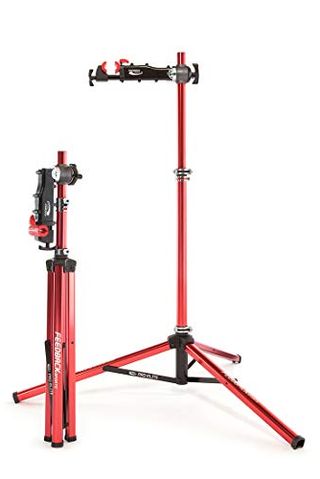
Best Value

Lightest Race Stand
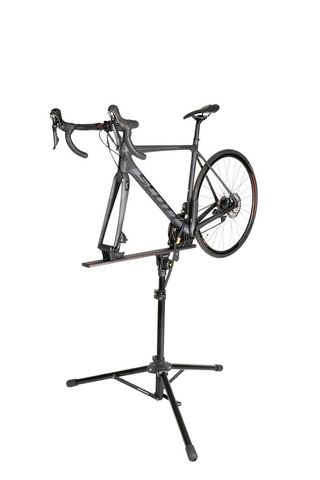
Sturdiest Construction

Practice Skillful Hygiene
No. 60 Soak the edge of a rag with degreaser and slide it back and forth between each cog to clean your cassette.
No. 61 Wipe down grit seals on break components after every ride.
No. 62 Blasting your bike with a loftier-pressure level hose forces in unwanted grit and dirt and blows out much-needed grease and lube. Apply a bucket of water and a sponge instead.
No. 63 Employ rubbing alcohol to remove black grime from your rims.
No. 64 Don't exist agape to scrub your bar tape. Assuming it's wrapped properly, it can handle the elbow grease.
Worse for Wear

No. 65 Worn cleats can release unexpectedly or stick in the pedal. Alter them when the vesture indicator tells y'all to.
No. 66 Shift to the smallest cog and ring combination when storing your bike for a long period of time. It will prevent wear on your derailleur springs.
No. 67 Supersede a worn seatpost clamp. If y'all keep riding on it, your saddle won't hold its position.
No. 68 When your chainring teeth start to wait similar shark fins, it'due south time to replace your chainrings.
No. 69 A thin rim on a tire's sidewall tin can neglect under pressure and cause you to crash. Inspect your rims past looking for a concave section or by running your fingers along the braking surface to experience for one.
No. lxx Chains and cogs wear together.
No. 71 If you don't take a concatenation checker, get notice a ruler. When 24 links of your chain measure more than 12 i⁄16 inches from rivet to rivet, it's time to replace your chain. Once that measurement reaches 12 1⁄8 your cogset is likely shot as well.
No. 72 Protect your frame from rubs with neatly practical electrical tape or anti-slip bathtub record.
Righty-Tighty—Most of the Time
No. 73 To tighten a loose headset, loosen the stem, tighten the meridian cap, and retighten the stem.
No. 74 Installing new pedals? Make sure you thread your left pedal into the left crankarm and your correct into the right (they should be marked). If you inadvertently interchange them, you will likely take to buy new crankarms. The good news is that your pedals volition probably survive the mistake.
No. 75 To remove your pedals, fix the driveside crankarm at ix o'clock for ameliorate leverage. Then turn your wrench clockwise to loosen your non-driveside pedal and counterclockwise to loosen the one on the driveside.
No. 76 Loosen your stalk-binder bolts, not your tiptop-cap bolts, to straighten an askew handlebar.
No. 77 Straighten your wheel—without a truing stand up.
No. 78 Glue a tubular. It's easier than you recall.
Tools Rules
No. 79 When breaking a chain with a concatenation tool, exercise not button the pivot all the mode through (unless you're using a special replacement pin). You won't be able to get it back in.
No. fourscore To correctly shut a quick-release skewer, tighten the nut on the reverse side simply until business firm, so flip the lever to the closed position. You should feel resistance only withal exist able to completely shut the lever. If you can't, open the lever, loosen the nut a bit, and try again.
No. 81 Get and know how to use a torque wrench. It'southward the only manner to properly tighten bolts.
Slick Tricks
No. 82 Not all chain lubricants are the aforementioned. Cull the i that best suits your riding conditions.
No. 83 Carbon seatposts always get friction paste regardless of frame material. Carbon frames always get friction paste regardless of post fabric. Metal frames and posts always get anti-seize compound or grease.


No. 84 Afterward lubing your concatenation, backpedal a few revolutions and then wipe off the chain with a clean, dry rag. The lube is now in the rollers and betwixt the plates. The residue will merely attract crud.
No. 85 Utilize lube to the concatenation'southward rollers, not its side plates.
No. 86 Use friction paste, which contains tiny bits of grit, on carbon parts. Grease will cause them to sideslip.
No. 87 When lubricating a suspension fork, apply the lube recommended by the manufacturer. Other types can break downwards internal plastic and safe parts.
No. 88 Never clean the greasy moving-picture show off a new concatenation. It's better than what you'll put on after. Start your lube habit after the factory grease has worn off, which ordinarily takes about two rides.
The Flat Truth
No. 89 You lot don't demand strong hands to change a flat without levers; it's all about proper technique.
No. 90 If you don't remove the instigator—thorn, glass, stone, metallic shaving—from the inside of your tire, or expect for a tear in your tire'southward sidewall, you volition flat once more. And once again.
No. 91 Don't adhere a patch to a tube until the glue you applied goes from clear to cloudy.
No. 92 When replacing a spoke, make sure information technology's the right length. Too long and yous risk a punctured tube.
Economic Aggrandizement

No. 93 For fewer broken valves, inflate your tire with the valve stem facing down, between ten and 2 o'clock.
No. 94 To more easily seat a tire on a tubeless rim, inflate with a compressor.
No. 95 Apply both hands when operating a flooring pump.
No. 96 Some pump-head levers push down to clamp; others pull up. Know which kind you have. If yous force it, you can ruin seals.
No. 97 Remove as much air from your punctured tube as possible before changing a apartment. It'll be easier to remove the tire.
When You're Not Riding

No. 98 Hang hooks in your garage to go on your bicycle vertical. Resting it on its side tin can knock your derailleurs out of whack.
No. 99 Store a mount wheel with the suspension-fork legs pointed up so the oil can flow downwards and keep the cream rings nether the seals well lubricated.
No. 100 If you have no choice but to store your wheel on a clammy concrete garage floor, slip cardboard underneath the tires to preclude dry rot in the casings.
No. 101 Regularly audit your carbon-fiber frame for cracks, and touch up scratches with a couple coats of articulate boom shine.
—Contributors: Andrew Bernstein, Tori Bortman, Brian Fiske, Jenny Kallista, Jim Langley, Mike Yozell, Molly Hurford
This content is created and maintained by a third party, and imported onto this page to help users provide their e-mail addresses. Y'all may be able to find more information about this and similar content at piano.io

How To Service A Used Bike At Home,
Source: https://www.bicycling.com/repair/a20012653/bike-repair-tips/
Posted by: santosmundint.blogspot.com
0 Response to "How To Service A Used Bike At Home"
Post a Comment